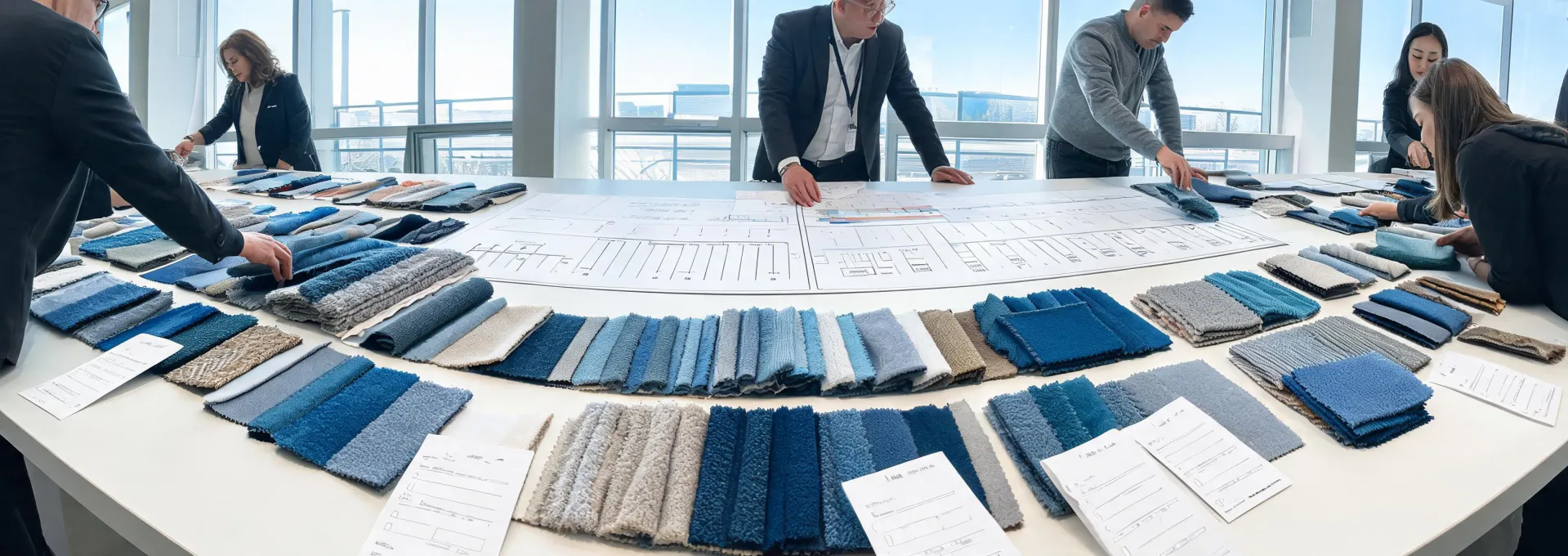
Fabric selection table with upholstery swatches and specification tools

A practical material filter

Camira Fabric Selection

Screen by use, handfeel, weight, performance evidence and budget before color preference turns into an incomplete specification.

The useful question is not “Which fabric is best?” It is “Which construction answers this application, maintenance plan and approval route with the fewest unresolved assumptions?”

Camira’s selection path converts broad preferences into fields that can be compared across samples. It keeps tactile judgment in the process while making composition, GSM, usable width, abrasion context, colorfastness and dye-lot approval visible to procurement.

1

Define the use

Name the surface, occupancy, expected contact, cleaning procedure, light exposure and installation method. “Hospitality” is a market; “hotel lobby lounge seat cleaned weekly with the operator’s approved system” is a usable starting point.

2

Set material boundaries

Record fiber preferences, handfeel, weave construction, target GSM, minimum usable width, backing and color direction. Ranges keep early exploration open while protecting the dimensions that affect cutting, drape and upholstery behavior.

3

Name the evidence

Request the applicable method for Martindale abrasion, colorfastness, pilling resistance or dimensional stability. The report needs to identify the specimen and finish; a headline number alone cannot confirm every colorway or backing.

Decision readiness

Four gates from idea to release

The indicators describe information completeness, not manufacturing progress or performance claims. A project moves forward when the relevant question at each gate has a recorded answer.

Application gateUse, maintenance and commercial constraints named
1 of 4
Construction gateComposition, GSM, width, weave and backing compared
2 of 4
Evidence gateTest methods and document scope checked
3 of 4
Approval gateSample stage and bulk release reference recorded
4 of 4

Evidence checkpoint

What a buyer can ask to review

The availability and applicability of each item must be confirmed for the selected product, supplier entity, factory and order.

Material specification

Fiber composition, nominal GSM, usable width, construction and finish stated for the proposed article.

Test report context

Method, specimen condition, result, date and exact product or construction scope.

Compliance document

Issuer, named entity, product coverage and validity checked before a project submittal.

Approval trail

Lab dip, strike-off, handloom and production-lot decisions kept as separate records.

Selection routeStrengthTrade-off to reviewUseful verification
Natural-fiber constructionHandfeel and moisture responseBatch variation and care demandsComposition, shade tolerance and care trial
Synthetic-fiber constructionDimensional consistency and strengthFinish chemistry and microfiber considerationsMaterial disclosure and application test
High abrasion targetSupports repeated-contact screeningDoes not predict every failure modeNamed Martindale method plus seam and cleaning review
Backed upholsteryCan alter stability and handlingMay change stiffness and flame responseTest the supplied composite construction

Start a guided fabric shortlist

Send the end use, tactile direction, target parameters, quantity and budget boundary. Camira will organize the missing questions and define which sample stage can answer each one.

Submitting this form confirms you have read our Privacy Policy.